
Rental businesses operate differently from traditional retail businesses. Instead of selling products once, rental companies must manage inventory availability, reservations, returns, deposits, maintenance, pricing, and customer relationships throughout the rental lifecycle. As the business grows, managing these activities through spreadsheets, phone calls, and separate tools can quickly become complicated.
This is where rental business software can make a significant difference. The right platform can centralize daily operations, reduce manual work, prevent double bookings, and create a smoother experience for both businesses and customers. Whether you rent construction equipment, cars, party supplies, furniture, or other assets, choosing the right software can help you build a more organized and scalable operation.
What Is Rental Business Software?
Rental business software is a digital platform designed to help companies manage products or assets that are rented for a specific period. Unlike conventional eCommerce software, rental-focused solutions account for time-based availability, reservations, returns, deposits, rental pricing, and asset utilization.
Modern rental platforms can combine inventory management, online bookings, payment processing, customer management, reporting, and scheduling in one system. Some solutions are designed for specific industries, while others support multiple rental categories.
For businesses managing complex rental operations, rental business software can provide centralized control over inventory, customers, orders, pricing, and other essential processes.
Why Do Rental Businesses Need Specialized Software?
Rental operations involve several moving parts. A single asset may be reserved by one customer today, returned tomorrow, inspected for maintenance, and rented again later. Managing these activities manually increases the risk of errors.
Specialized software helps businesses:
- Track inventory availability in real time
- Automate invoices and payment collection
- Manage security deposits
- Maintain customer records
- Monitor business performance
- Manage multiple locations or vendors
- Offer customers online booking options
The goal is not simply to digitize existing processes but to create a connected workflow where different parts of the rental business work together.
Key Factors to Consider When Choosing Rental Software
Before investing in a rental solution, businesses should evaluate the following factors to determine whether the software can support their current operations and future growth.
1. Identify Your Rental Business Requirements
The first step is to clearly define what your business needs from the software. Equipment rental businesses may require detailed inventory tracking, maintenance records, deposits, and damage management. Car rental companies may need vehicle availability calendars, customer verification, mileage tracking, and flexible pricing.
Party rental businesses, on the other hand, may need to manage packages containing multiple items such as tables, chairs, decorations, lighting equipment, and catering supplies.
Make a list of your current processes and identify which activities you want to automate. This will help you avoid choosing software based solely on generic features.
2. Look for Powerful Inventory Management
Inventory management is one of the most important capabilities of rental software. The solution should allow you to add products or assets, track their availability, monitor quantities, and identify items that are currently rented, reserved, available, or undergoing maintenance.
For equipment rental businesses, asset-level tracking can be particularly useful. Car rental companies may need to manage individual vehicles, while party rental businesses may need quantity-based inventory management.
A strong inventory system should also help prevent double bookings by automatically reflecting availability based on existing reservations.
3. Evaluate Booking and Reservation Features
A smooth booking process benefits both customers and rental businesses. Look for software that provides an intuitive booking system where customers can select rental dates, choose products, review pricing, and submit reservations without unnecessary steps.
A real-time availability calendar can make it easier for customers to understand which products or vehicles are available. Businesses should also be able to manage reservations from an administrative dashboard and make changes when required.
Features such as booking confirmations, cancellation management, rental duration settings, and automated notifications can further improve operational efficiency.
4. Check Pricing and Payment Flexibility
Different rental businesses use different pricing models. Some charge hourly rates, while others offer daily, weekly, or monthly pricing. Some businesses also use seasonal pricing, weekend rates, security deposits, discounts, or additional service fees.
Your chosen software should support pricing structures relevant to your business. It should also provide secure payment options and make it easy to manage deposits, refunds, outstanding balances, and completed transactions.
For car rentals, for example, pricing may depend on vehicle type and rental duration. Equipment rental businesses may charge additional fees for delivery or extended usage. Party rental companies may offer bundled packages. Flexible pricing capabilities can accommodate these requirements.
5. Consider Customer Management Features
Customer information is an important part of rental operations. The software should allow businesses to maintain customer profiles containing relevant contact details, booking history, invoices, and other necessary information.
A centralized customer management system can help businesses understand repeat customers and provide more personalized service. It can also reduce the need to search through multiple systems whenever a customer contacts the business.
For businesses that rely heavily on repeat rentals, customer history can become particularly valuable for improving retention and service quality.
6. Make Sure It Supports Multiple Rental Types
If you operate more than one rental category, choose software that can accommodate different products and rental models.
For example, a business may rent construction equipment alongside tools or offer cars in several categories. A party rental company may provide furniture, decorations, audio equipment, and event accessories.
The software should allow you to organize different categories, define individual pricing rules, manage varying rental durations, and maintain accurate availability across your entire inventory.
7. Assess Website and Mobile Experience
Customers increasingly expect to make bookings online using smartphones and tablets. Therefore, the rental software should support a responsive and user-friendly customer experience.
The booking interface should be easy to navigate, product information should be clearly displayed, and customers should be able to complete reservations without confusion.
A mobile-friendly experience can be particularly important for car rentals, where customers may need to make reservations while traveling. Equipment and party rental customers may also prefer browsing and booking products from mobile devices.
8. Check Automation and Notifications
Automation can significantly reduce the amount of manual work involved in rental management. Look for software that can automate booking confirmations, payment notifications, reminders, return alerts, and other routine communications.
For example, customers can receive reminders before their rental period begins or notifications when a payment is due. Businesses can also receive alerts about upcoming reservations and returns.
These automated workflows help reduce human error while keeping customers informed throughout the rental lifecycle.
9. Evaluate Scalability
The software you choose should not only meet your current needs but also support future growth. Your inventory may increase, you may add new locations, or you may expand into additional rental categories.
Before making a decision, consider whether the software can accommodate a growing number of products, customers, bookings, and administrators.
Solutions such as Yo!Rent can be considered by businesses looking for ready-to-use rental software that can support different rental business models without requiring them to build their entire system from scratch.
10. Review Security, Support, and Customization
Security should never be overlooked when selecting rental software. Since the system may handle customer information and payment-related data, businesses should evaluate its security capabilities and data management practices.
Reliable customer support is equally important. Even well-designed software can require assistance during setup, configuration, or troubleshooting.
Customization is another factor worth considering. Every rental business has unique workflows, so the ability to configure features, pricing, categories, and operational processes can make the software more useful in the long term.
Common Mistakes to Avoid
Businesses often make the mistake of choosing software based only on price or the number of features advertised. A cheaper solution may lack important capabilities, while a feature-heavy system may contain tools your business will never use.
Another common mistake is failing to consider scalability. Software that works for a small inventory may become restrictive as your business grows.
It is also important to test the customer-facing booking experience before making a final decision. Complicated booking processes can discourage customers even when the software works well from an administrative perspective.
Final Thoughts
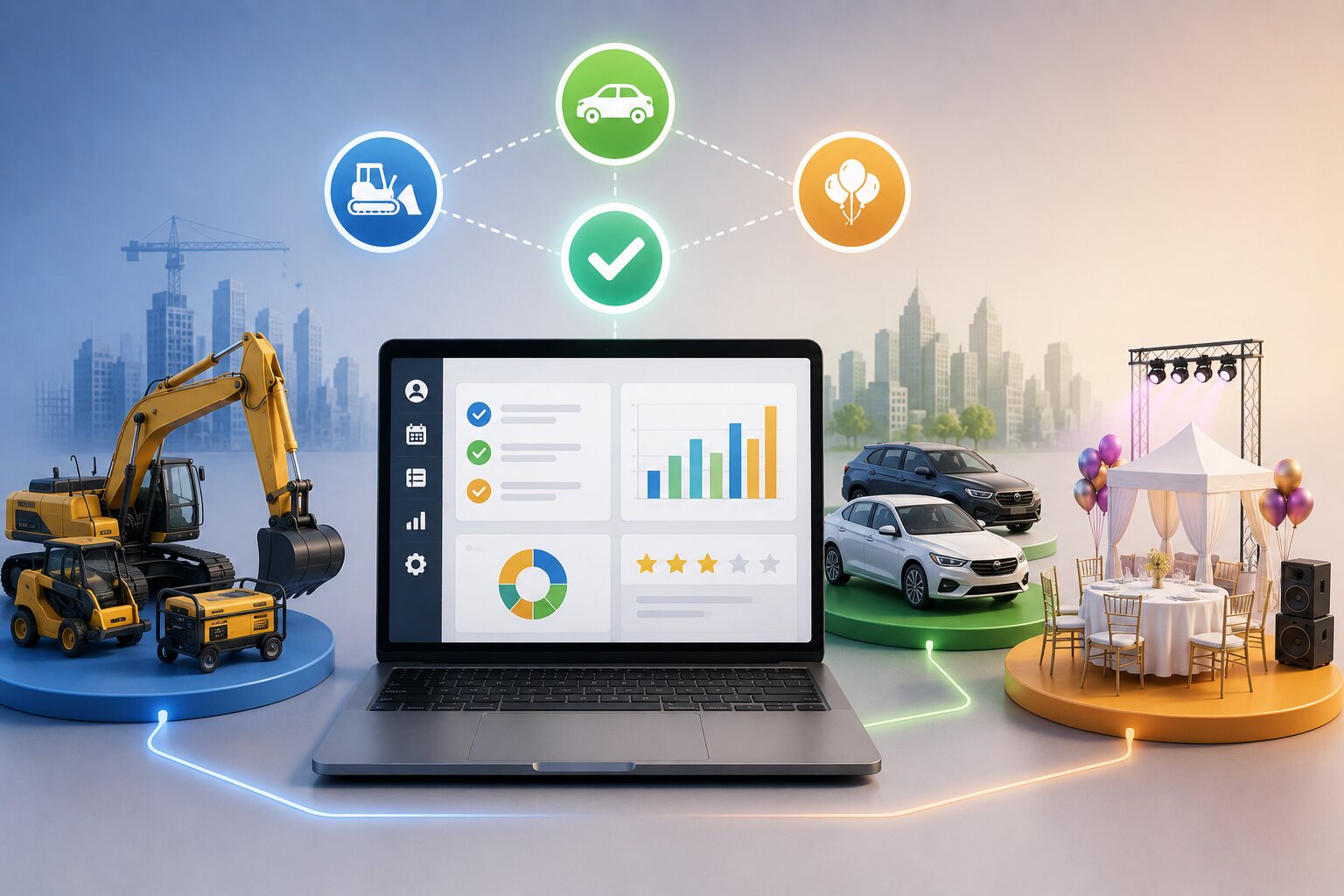
The right rental software can transform a rental business from a collection of manual processes into a more organized, scalable, and customer-friendly operation. Equipment rental companies can benefit from asset tracking and maintenance workflows, car rental businesses can focus on vehicle availability and booking management, while party rental companies can simplify complex event orders and delivery schedules.
The best solution is ultimately the one that matches your rental model, operational requirements, budget, and growth plans. Businesses seeking a customizable platform for different rental niches can also consider Yo!Rent, which supports equipment, vehicle, party, and other rental business models through industry-specific functionality.
By investing in the right rental platform today, businesses can reduce administrative work, improve asset utilization, deliver smoother customer experiences, and build a stronger foundation for long-term rental industry growth.