

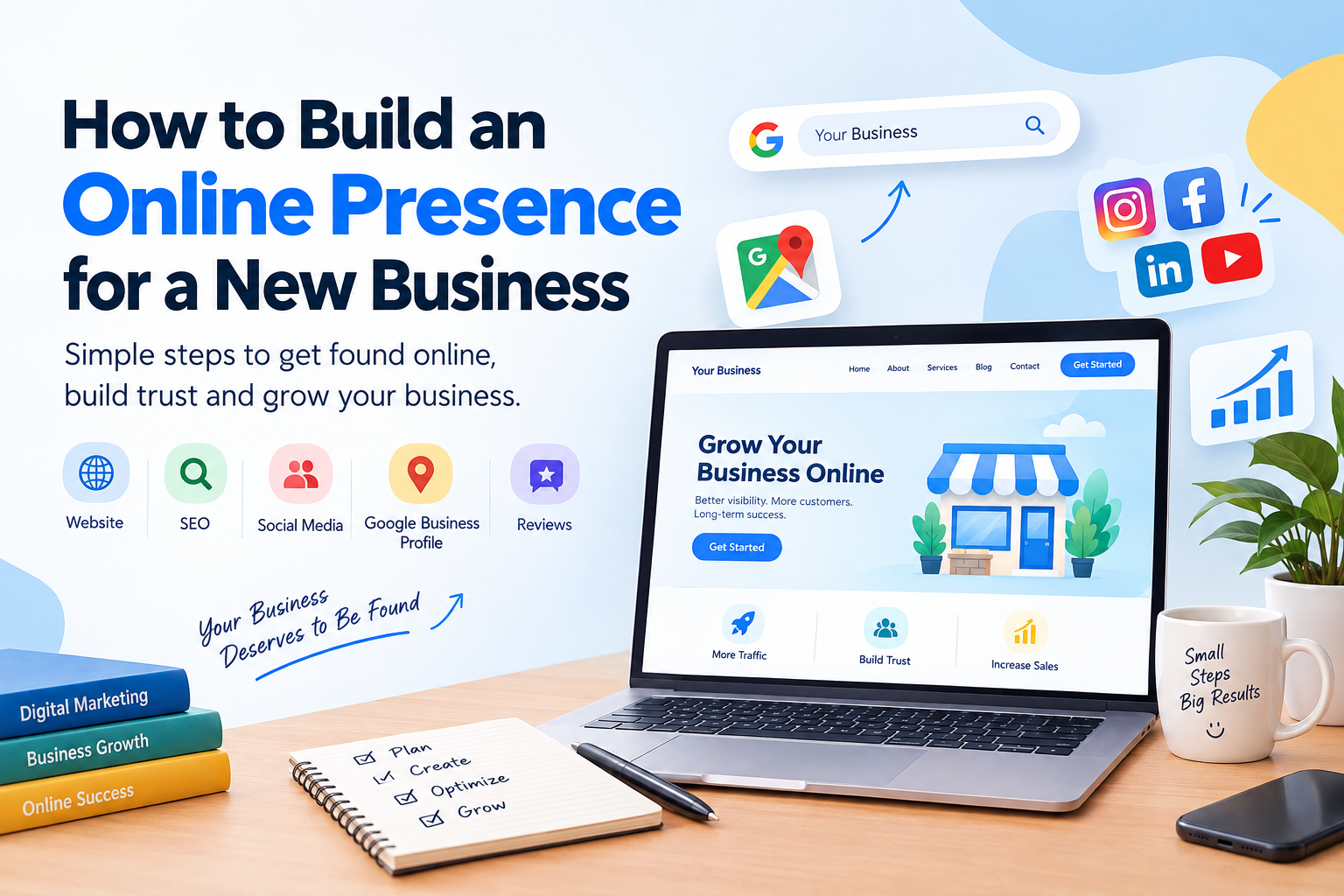
Starting a new business is exciting, but getting people to know about your business can be difficult. Today, most people search online before buying a product or contacting a service provider. This is why having a strong online presence is important for every new business.
An online presence means everything people can find about your business on the internet. It can include your website, Google Business Profile, social media pages, online reviews, blog posts, and search engine results.
The good news is that you do not need a huge budget to get started. With the right steps, even a small business can build trust and reach new customers online.
Here are some simple ways to build an online presence for your new business.
1. Create a Professional Website
Your website is one of the most important parts of your online presence. It gives people a place where they can learn about your business, products, and services.
A good business website does not have to be complicated. It should be clean, fast, easy to use, and work well on mobile phones.
Your website should normally include important pages such as:
- Home
- About Us
- Services or Products
- Contact Us
- Blog
- Privacy Policy
Make sure your contact information is easy to find. Add your phone number, email address, business location, and contact form if needed.
Your website should also clearly explain what your business does and how it can help customers.
2. Choose the Right Business Name and Domain
Your business name should be easy to remember and simple to spell. If possible, use a domain name that is close to your business name.
For example, if your business is called “Green Home Cleaning,” a domain such as greenhomecleaning.com can be easier for customers to remember.
Try to avoid very long domain names, unnecessary numbers, or difficult spellings.
A simple domain can make your business look more professional and make it easier for people to find you.
3. Create a Google Business Profile
If your business serves customers in a specific city or area, a Google Business Profile can be very useful.
It can help your business appear when people search for services near them on Google Search and Google Maps.
Add accurate information such as:
- Business name
- Address
- Phone number
- Website
- Opening hours
- Business category
- Photos
- Services
Keep your information updated. If your phone number or opening hours change, update them as soon as possible.
You can also ask real customers to leave honest reviews after using your products or services.
4. Use Social Media
Social media can help a new business connect with potential customers. You do not need to use every social media platform.
Instead, choose platforms where your target customers are active.
For example, a fashion business may benefit from visual platforms, while a professional service business may focus more on platforms used for business networking.
You can share:
- Product photos
- Short videos
- Customer stories
- Helpful tips
- Business updates
- Behind-the-scenes content
- Special offers
The most important thing is consistency. You do not need to post ten times a day. A simple and regular posting schedule can be more useful.
5. Start SEO for Your Website
Search engine optimization, also called SEO, helps search engines understand your website and can help your pages appear in relevant search results.
For a new business, start with simple SEO.
First, find keywords that your potential customers may search for. For example, a local bakery may target phrases such as “bakery in Chandigarh” or “birthday cake near me.”
Use relevant keywords naturally in your:
- Page titles
- Headings
- Website content
- Image descriptions
- URLs
- Meta descriptions
Do not add the same keyword again and again. Write for people first and search engines second.
Also make sure your website loads quickly and works properly on mobile devices.
6. Create Useful Content
Content can help your business answer questions that potential customers have.
One of the easiest ways to start is by creating a business blog.
For example, a digital marketing business could write articles about SEO, Google Ads, social media marketing, and website development.
A fitness business could write about exercise, healthy habits, and workout planning.
Your content should solve real problems instead of only promoting your business.
For example, instead of writing only “Buy Our Service,” you could write an article explaining how customers can choose the right service for their needs.
Useful content can bring visitors to your website and help your business build trust.
7. Build Customer Reviews
Reviews are important because new customers often want to know what other people think before buying.
Ask satisfied customers to leave honest feedback on platforms where your business has a profile.
Never create fake reviews. They can damage your reputation and reduce customer trust.
When someone leaves a review, take time to respond. Thank customers for positive feedback and respond politely when someone has a problem.
A professional response shows that your business cares about its customers.
8. Keep Your Brand Consistent
Your business should look similar across different online platforms.
Use the same:
- Business name
- Logo
- Main colors
- Contact information
- Business description
- Brand style
For example, if your website uses one business name but your social media page uses a different name, customers may become confused.
Consistency makes your business easier to recognize and can make your online presence look more professional.
9. Use Online Advertising Carefully
Organic marketing can take time. If you have a suitable budget, online advertising can help you reach potential customers faster.
You can use platforms such as Google Ads or social media advertising.
Before spending money, decide what you want from your campaign.
Your goal could be:
- Website visits
- Phone calls
- Form submissions
- Product sales
- Store visits
- App downloads
Start with a small budget and track your results. Do not increase your advertising budget simply because you are getting clicks. Check whether those clicks are actually helping your business.
10. Track Your Online Performance
Building an online presence is not a one-time task. You need to check what is working and what needs improvement.
Tools such as Google Analytics and Google Search Console can help you understand how people find and use your website.
You can track things such as:
- Website visitors
- Search impressions
- Search clicks
- Popular pages
- Traffic sources
- Conversions
- Top-performing keywords
This information can help you make better marketing decisions.
11. Focus on Your Target Customers
You do not need to reach everyone on the internet.
Your goal should be to reach people who are most likely to need your product or service.
Think about your ideal customer. Ask yourself:
- What problem do they have?
- What are they searching for?
- Where do they spend time online?
- What information do they need before buying?
- Why would they choose my business?
Once you understand your customers, you can create better content and marketing campaigns.
12. Be Patient and Consistent
A new online presence usually does not become successful overnight.
SEO can take time. Social media growth can take time. Building reviews and customer trust also takes time.
Instead of trying everything at once, focus on the basics first.
Create a good website, set up your business profiles, publish useful content, stay active on the right social platforms, and keep improving your website.
Small improvements made consistently can create strong results over time.
Conclusion
Building an online presence is an important step for a new business. Your website, Google Business Profile, social media accounts, SEO, content, reviews, and online advertising can all work together to help people find and trust your business.
You do not need to do everything on the first day. Start with the most important steps and build your online presence slowly.
The main goal is simple: make it easy for the right customers to find your business, understand what you offer, and contact you.
With useful content, consistent branding, good customer service, and regular improvement, your new business can create a strong foundation online.