

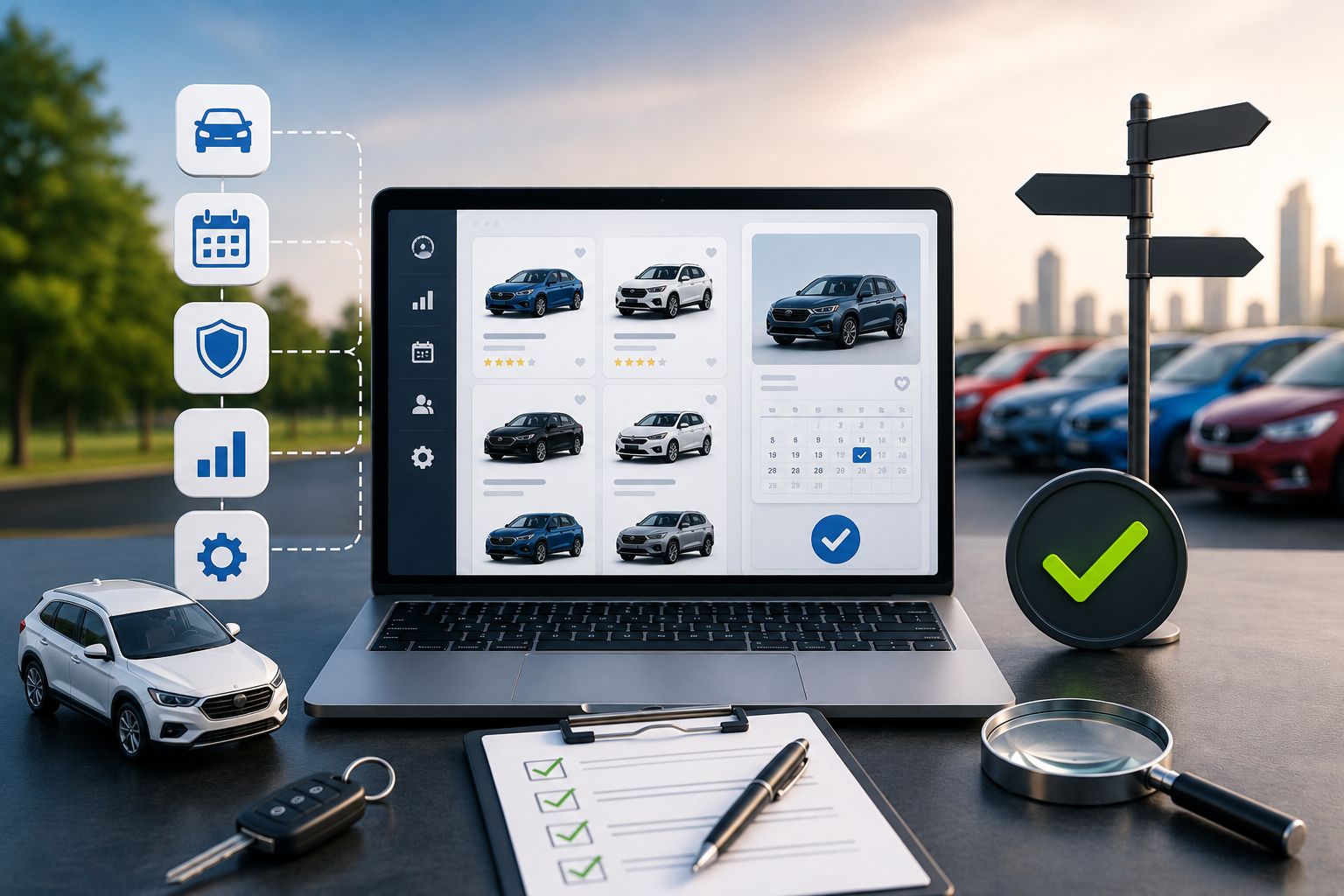
The car rental industry is becoming increasingly digital, and customers now expect fast bookings, transparent pricing, convenient payments, and seamless communication. For rental businesses, meeting these expectations while managing vehicles, reservations, customers, and payments manually can quickly become challenging.
This is where the right software can make a significant difference. A well-designed solution can automate repetitive tasks, centralize operations, reduce administrative work, and help rental companies deliver a better customer experience.
When evaluating car rental software, businesses should look beyond basic booking functionality. The ideal solution should support the entire rental lifecycle from vehicle availability and reservations to payments, customer management, reporting, and post-rental communication.
Why Choosing the Right Car Rental Software Matters!
Car rental businesses deal with several moving parts every day. Vehicles need to be tracked, bookings need to be managed, customer information needs to be organized, and payments must be processed securely. Managing these activities through spreadsheets, emails, or disconnected systems can lead to errors and inefficiencies.
The right software brings these processes together in one centralized system. It can help businesses automate bookings, monitor vehicle availability, manage pricing, streamline payments, and maintain customer records. More importantly, scalable software can grow alongside the business as its fleet, customer base, and operational requirements expand.
Before selecting a solution, businesses should therefore evaluate its features, usability, scalability, security, integrations, and customization options.
Essential Features to Consider in Car Rental Software
Here are the key features businesses should evaluate when choosing car rental software:
1. Online Booking and Reservation Management
Online booking is one of the most important features for any modern car rental business. Customers should be able to browse available vehicles, select rental dates, choose pickup and drop-off locations, and complete reservations without unnecessary steps.
The software should provide businesses with a centralized reservation dashboard where they can view, modify, confirm, or cancel bookings. Automated booking confirmations and notifications can further reduce manual communication.
A streamlined reservation process improves customer convenience while helping businesses minimize double bookings and scheduling errors.
2. Vehicle Availability Tracking
Real-time availability tracking should be another priority when evaluating rental software. Customers and administrators need accurate information about which vehicles are available for specific dates and locations.
An availability calendar can make it easier for rental operators to identify booking conflicts and manage vehicle schedules. It can also help customers find suitable vehicles without having to contact the rental company manually.
3. Flexible Pricing and Rate Management
Rental prices may vary depending on vehicle type, rental duration, season, location, demand, or additional services. Therefore, the software should provide flexible pricing management capabilities.
Businesses should be able to create different rental rates, discounts, promotional offers, seasonal pricing, and additional charges. The system should also calculate the total rental cost automatically based on the selected options.
Flexible pricing tools allow businesses to respond more effectively to market demand while maintaining transparent pricing for customers.
4. Secure Online Payments
A smooth payment experience is critical for online car rentals. Good rental software should support secure payment processing and multiple payment methods.
Depending on the target market, businesses may want to accept credit and debit cards, digital wallets, bank transfers, or other supported payment options.
The system should also provide transaction records, payment confirmations, refunds, deposits, and cancellation-related charges. Secure payment processing can increase customer confidence and reduce payment-related administrative work.
5. Customer Management
Customer relationship management is another essential component. The software should maintain organized customer profiles containing relevant booking details, contact information, rental history, and preferences.
Having customer data in one place allows businesses to provide more personalized service and quickly access information when customers make repeat bookings.
Automated communication tools can also be used to send booking confirmations, reminders, payment notifications, pickup instructions, and post-rental messages.
6. Pickup and Drop-Off Management
Managing vehicle pickup and return processes efficiently can significantly improve the rental experience. The software should allow businesses to record pickup and drop-off details, locations, scheduled times, vehicle condition, and related notes.
Some solutions may also support multiple pickup and return locations, making them suitable for businesses operating across several branches.
A well-organized pickup and drop-off workflow reduces confusion and helps staff manage vehicle handovers more efficiently.
7. Maintenance and Service Tracking
Vehicles require regular maintenance to remain safe, reliable, and available for customers. Rental software should provide tools for tracking maintenance schedules, inspections, repairs, service history, and upcoming maintenance requirements.
Businesses can use automated reminders to schedule servicing before vehicles become due for maintenance. This helps reduce unexpected downtime and supports better fleet utilization.
8. Reporting and Analytics
Data-driven decision-making can help rental businesses identify opportunities for growth and operational improvement. The software should provide reports covering important metrics such as bookings, revenue, fleet utilization, cancellations, customer activity, and vehicle performance.
Businesses can use these insights to identify their best-performing vehicles, understand customer demand, evaluate pricing strategies, and make informed fleet management decisions.
9. Mobile-Friendly Experience
Customers increasingly use smartphones to search for and book rental vehicles. Therefore, the software should provide a responsive, mobile-friendly booking experience.
The interface should make it easy for customers to search vehicles, compare options, make reservations, complete payments, and access booking information from their mobile devices.
A mobile-friendly experience can help businesses reach more customers and reduce friction during the booking process.
10. Notifications and Automated Communication
Automated notifications can save employees significant time while keeping customers informed. The software should ideally support notifications for booking confirmations, payment updates, reservation reminders, pickup information, cancellations, and returns.
Notifications through email, SMS, or other supported channels can help reduce missed bookings and improve communication throughout the rental journey.
How to Evaluate Car Rental Software Before Buying
Once the essential features have been identified, businesses should compare potential solutions based on more than just the feature list. Consider the software’s ease of use, scalability, security, customization capabilities, technical support, integration options, and overall cost.
It is also useful to request a demo or trial whenever possible. A practical evaluation can reveal whether the interface is intuitive, whether administrative workflows are efficient, and whether the software can support the expected number of vehicles and bookings.
Businesses should also consider future requirements. Choosing a solution that only meets today’s needs may result in another software migration as the company grows.
Why Ready-Made Software Can Be a Practical Option
Developing a completely customized rental management system from scratch can require considerable time, technical resources, and investment. For businesses looking to launch or streamline operations more quickly, ready-made software can provide a practical alternative.
Solutions such as Yo!Rent provides businesses with a ready-to-use software foundation that can be configured according to specific rental business requirements. This can help reduce development time while providing essential functionality for managing rental operations.
However, businesses should always evaluate a solution based on their individual requirements rather than choosing software solely because it offers a large number of features.
Final Thoughts
Choosing the best car rental software requires careful consideration of both current operational needs and future growth plans. Features such as online booking, fleet management, availability tracking, flexible pricing, secure payments, customer management, maintenance tracking, analytics, mobile accessibility, and integrations can significantly influence the efficiency of a rental business.
The ideal solution should not simply automate bookings; it should help connect different areas of the business and create a smoother experience for both customers and administrators. Before making a final decision, compare available solutions, evaluate their features, test usability, and assess scalability, security, and support.
For businesses seeking a ready-made solution, Yo!Rent can be considered as one option for building and managing rental business operations with configurable software functionality. Ultimately, the best car rental management software is the one that aligns with your business model, simplifies daily operations, supports growth, and delivers a convenient rental experience.