

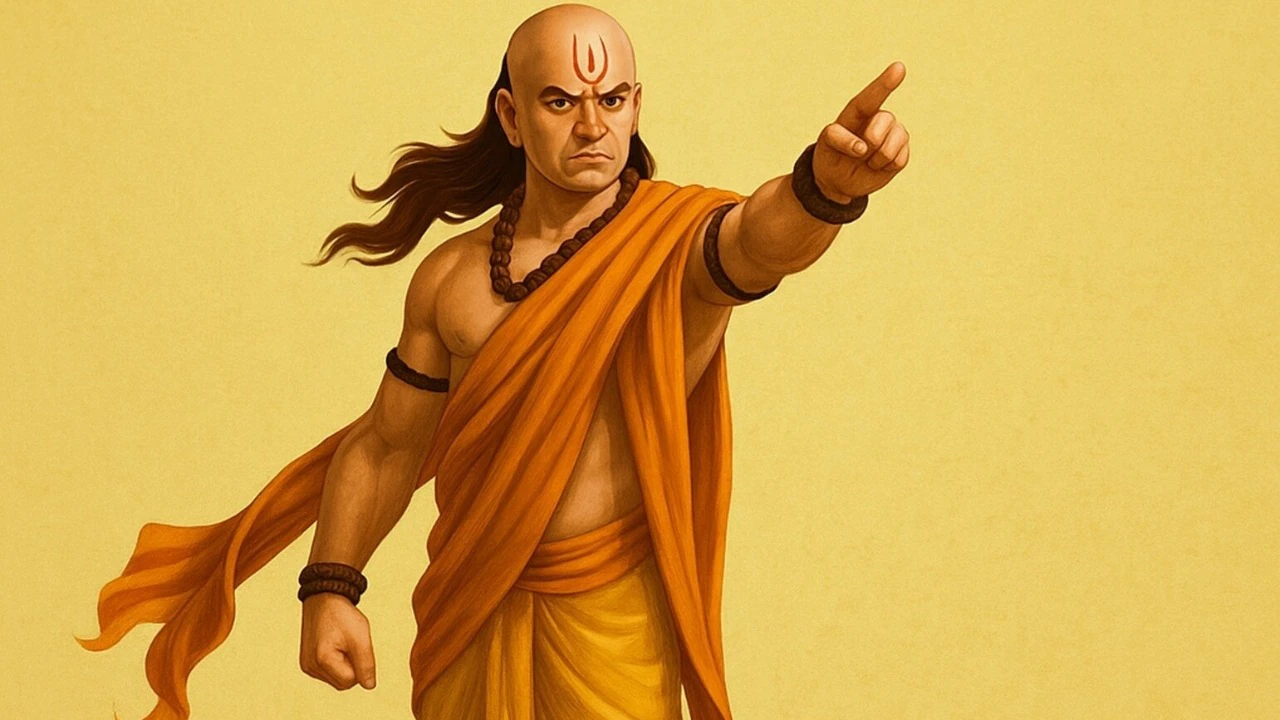
The Man Behind India’s First Great Empire
Chanakya, also known as Kautilya or Vishnugupta, was one of the greatest political thinkers, economists, strategists, and philosophers in ancient Indian history. He is remembered as the mastermind behind the rise of the Maurya Empire and the mentor of its first emperor, Chandragupta Maurya. His ideas about politics, economics, diplomacy, warfare, and governance continue to influence leaders and thinkers even thousands of years after his time.
Often compared with famous political philosophers such as Machiavelli, Chanakya created a detailed framework for running a powerful and stable state. His famous work, the Arthashastra, is considered one of the world’s earliest and most comprehensive books on political science, economics, administration, and military strategy.
Chanakya lived during a period of political instability in India when many small kingdoms fought for power. Through his intelligence, determination, and strategic thinking, he transformed a young Chandragupta Maurya into a powerful ruler and helped establish the Maurya Empire, one of the largest empires in Indian history.
His life represents the power of knowledge, leadership, discipline, and strategic planning. Even today, Chanakya’s teachings are studied in politics, business management, leadership training, and economics.
Early Life of Chanakya
The exact details of Chanakya’s early life are uncertain because he lived more than 2,300 years ago, and many stories about him come from ancient Indian texts and traditions. Historians believe that Chanakya was born around the 4th century BCE.
According to many historical sources, Chanakya was born in a Brahmin family. Some traditions mention that his birthplace was Taxila (Takshashila), an ancient center of learning located in present-day Pakistan. Taxila was one of the most important educational institutions of the ancient world, attracting scholars and students from different regions.
Chanakya received a highly advanced education at Taxila. He studied subjects such as:
- Politics and governance
- Economics
- Military strategy
- Philosophy
- Law
- Medicine
- Diplomacy
His deep understanding of different fields helped him become a skilled teacher, advisor, and strategist.
From a young age, Chanakya was known for his sharp intelligence and fearless personality. Ancient stories describe him as a person who valued knowledge and wisdom more than physical appearance or wealth.
Chanakya and the Fall of the Nanda Dynasty
One of the most famous events in Chanakya’s life was his conflict with the Nanda Dynasty, which ruled the Magadha region of ancient India.
The Nanda rulers were extremely powerful and controlled a large army. However, according to traditional accounts, King Dhana Nanda insulted Chanakya during a meeting. This humiliation deeply affected Chanakya, and he took a vow to remove the Nanda Dynasty from power.
Instead of acting emotionally, Chanakya created a long-term strategy. He understood that defeating a powerful kingdom required intelligence, alliances, and proper leadership.
During this period, he discovered a young boy named Chandragupta Maurya. Chanakya recognized his leadership qualities and potential to become a great ruler.
He trained Chandragupta in:
- Military skills
- Political strategy
- Administration
- Diplomacy
- Leadership principles
Together, they built an army and developed a plan to challenge the Nanda Empire.
After years of preparation, Chandragupta Maurya successfully defeated the Nanda rulers and established the Maurya Empire around 322 BCE.
This achievement made Chanakya one of the most influential political advisors in Indian history.
Chanakya’s Role in Building the Maurya Empire
Chanakya was not just a teacher; he was the architect behind one of India’s greatest empires.
After Chandragupta became emperor, Chanakya served as his chief advisor. He helped design the administrative structure of the Maurya Empire and created systems that strengthened the kingdom.
His contributions included:
1. Strong Administration System
Chanakya believed that a successful kingdom required an organized administration. He suggested dividing responsibilities among different officials and maintaining strict control over government departments.
He focused on:
- Efficient taxation
- Law enforcement
- Public welfare
- Economic growth
- Security systems
2. Economic Development
Chanakya understood that a powerful economy was the foundation of a strong nation.
He emphasized:
- Agriculture development
- Trade expansion
- Proper taxation
- Resource management
- Protection of industries
Many economic ideas mentioned in the Arthashastra show that Chanakya had a deep understanding of financial management.
3. National Security and Defense
Chanakya believed that protecting the state was one of the most important duties of a ruler.
He recommended:
- Maintaining a strong army
- Creating intelligence networks
- Monitoring enemies
- Using diplomacy when necessary
His ideas about intelligence gathering were highly advanced for his time.
The Arthashastra: Chanakya’s Greatest Work
The Arthashastra is Chanakya’s most famous contribution to political philosophy and economics. It is an ancient Indian text that explains how a government should function.
The word “Arthashastra” comes from two Sanskrit words:
- “Artha” meaning wealth, resources, or economic prosperity
- “Shastra” meaning knowledge or science
Therefore, Arthashastra means the science of wealth and governance.
The book covers many subjects, including:
- Government administration
- Economic policies
- Foreign relations
- Military strategy
- Justice system
- Taxation
- Trade
- Agriculture
- Diplomacy
Unlike many philosophical works that focus only on ideals, Chanakya’s Arthashastra focuses on practical solutions for real-world problems.
Chanakya’s Political Philosophy
Chanakya had a realistic approach toward politics. He believed that rulers should make decisions based on logic, strategy, and the welfare of the state.
Some important principles of Chanakya’s political philosophy include:
The Importance of a Strong Leader
Chanakya believed that the success of a kingdom depended greatly on the qualities of its ruler.
A good king should be:
- Wise
- Disciplined
- Responsible
- Fair
- Hardworking
According to him, a ruler’s happiness should come from the happiness of the people.
The Role of Diplomacy
Chanakya was a master of diplomacy. He believed that conflicts should not always be solved through war.
He explained different strategies for dealing with other kingdoms:
- Peace agreements
- Alliances
- Negotiations
- Strategic actions
His diplomatic theories are still studied today.
Chanakya’s Intelligence Network
One of Chanakya’s most advanced ideas was the use of spies and intelligence systems.
He believed that a ruler needed accurate information to make effective decisions.
According to the Arthashastra, spies could help the government understand:
- Enemy plans
- Internal problems
- Corruption
- Public opinions
This shows Chanakya’s understanding of information management and national security.
Chanakya’s Teachings on Leadership and Success
Apart from politics, Chanakya’s teachings provide valuable lessons about personal growth and success.
Some famous principles associated with Chanakya include:
1. Knowledge is the Greatest Power
Chanakya believed that knowledge was more valuable than wealth because knowledge helps people create opportunities.
A person with wisdom can overcome difficult situations.
2. Discipline Leads to Success
Chanakya emphasized self-control and discipline.
He believed that successful people must control their emotions, manage their time, and remain focused on their goals.
3. Planning Before Action
One of Chanakya’s greatest lessons was the importance of strategy.
He believed that decisions should be based on careful analysis rather than emotions.
4. Choose Relationships Carefully
Chanakya warned people to be careful while choosing friends and partners.
He believed that the wrong association could damage a person’s success and reputation.
Chanakya’s Comparison With Machiavelli
Chanakya is often compared with Niccolò Machiavelli, the Italian political thinker who wrote “The Prince.”
Both thinkers focused on practical politics rather than idealistic theories.
Similarities between them include:
- Understanding human behavior
- Importance of strong leadership
- Use of strategy in politics
- Focus on maintaining power
However, Chanakya’s ideas were developed nearly 1,800 years before Machiavelli. Unlike Machiavelli, Chanakya also focused heavily on economic management, social welfare, and administrative systems.
Chanakya’s Legacy in Modern India
Chanakya’s influence continues to exist in modern times.
His teachings are studied by:
- Political leaders
- Business managers
- Economists
- Military strategists
- Students of history
Many management experts consider Chanakya’s principles useful for modern leadership and decision-making.
His ideas about:
- Strategic planning
- Resource management
- Leadership
- Competition
- Negotiation
are still relevant in today’s world.
Interesting Facts About Chanakya
1. He Had Many Names
Chanakya was known by different names:
- Chanakya
- Kautilya
- Vishnugupta
Each name is associated with different historical traditions.
2. He Created India’s First Large Empire
Through his guidance, Chandragupta Maurya established the Maurya Empire, which later became one of India’s most powerful empires.
3. He Was a Teacher Before Becoming a Political Advisor
Before entering politics, Chanakya was a respected teacher and scholar at Taxila University.
4. His Ideas Survived Thousands of Years
The Arthashastra remains an important historical document because it provides detailed information about ancient Indian society and governance.
Conclusion: The Timeless Wisdom of Chanakya
Chanakya was not just a political advisor; he was a visionary thinker who changed the course of Indian history. Through his intelligence, strategic planning, and knowledge, he helped create one of the greatest empires of ancient India.
His teachings about leadership, economics, diplomacy, and personal success continue to inspire people around the world.
The life of Chanakya teaches us that true power does not come only from wealth or force but from knowledge, planning, discipline, and wisdom. More than two thousand years later, his ideas remain valuable because they address universal principles of leadership and human behavior.
Chanakya’s legacy proves that a great thinker can influence generations, and his wisdom continues to guide leaders even in the modern age.