
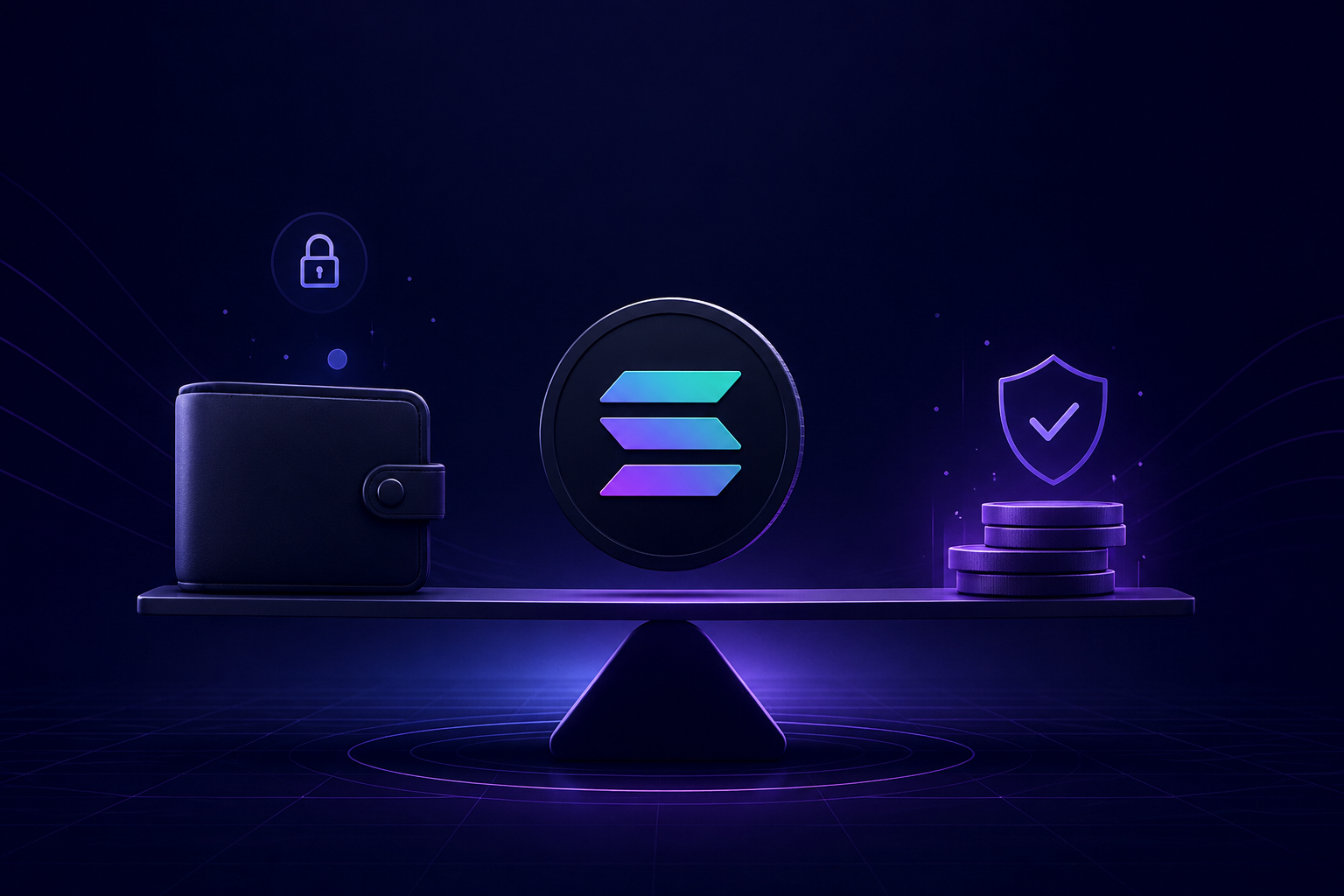
If you own SOL, you have probably asked yourself a simple question. Should you leave your tokens sitting in your wallet, or should you put them to work?
Many people buy SOL because they believe in the long-term growth of the Solana network. After buying, though, it is easy to leave those tokens untouched for weeks, months, or even years. While there is nothing wrong with holding SOL, it is worth asking whether your assets could be doing more while you continue to own them.
That is where Solana staking comes in. Instead of keeping your tokens idle, staking allows you to participate in the network while remaining the owner of your SOL. Before making that decision, however, it helps to know how staking works, what it offers, and whether it fits your goals.
What Happens When Your SOL Stays Idle?
Keeping SOL in your wallet is the simplest option. Your tokens remain available, and you can transfer or trade them whenever you choose.
For some people, this flexibility is important. If you plan to use your SOL in the near future or expect to make frequent trades, leaving it idle may feel like the easier choice.
Still, idle SOL does not actively contribute to the network. Your holdings stay exactly where they are until you decide to use them. If your plan is to hold SOL for a longer period, it is worth considering whether there is another approach that better matches your investment strategy.
How Staking Fits Into the Bigger Picture
Solana is a Proof of Stake blockchain. Instead of relying on energy-intensive mining, the network depends on validators that help process transactions and maintain security.
When token holders stake Solana, they delegate their SOL to a validator. The validator uses the delegated stake to participate in network operations. In return, eligible participants may receive staking rewards based on network rules and validator performance.
Importantly, staking does not mean giving away ownership of your tokens. You continue to own your SOL while supporting the blockchain through the validator you choose.
A Few Benefits Worth Thinking About
Staking is about more than earning rewards. It also allows token holders to play a role in supporting the health of the Solana ecosystem.
Some potential advantages include:
- Helping strengthen the security of the Solana network.
- Supporting reliable validators that contribute to network performance.
- Keeping your SOL active while continuing to hold your position.
- Receiving potential staking rewards, depending on network conditions.
For long-term holders, these benefits often make staking an option worth exploring.
Before You Decide, Ask Yourself These Questions
Not every SOL holder has the same priorities. Your decision should depend on how you plan to use your assets.
Ask yourself:
- Am I holding SOL for the long term or planning to trade soon?
- Do I want my tokens to contribute to the network?
- Am I comfortable with the unstaking process before accessing my funds?
- Have I researched the validator I plan to use?
Your answers can help you decide whether keeping SOL idle or staking better matches your needs.
Choosing the Right Validator Is Just as Important
If you decide to stake, selecting a validator deserves careful attention. Validators are responsible for participating in the network, and their performance can affect the staking experience.
Rather than choosing the first option you see, spend a little time comparing validators.
Here are a few things to review:
- Consistent uptime and reliable performance.
- Transparent commission rates.
- A strong reputation within the Solana community.
- Clear communication about validator operations.
- Long-term commitment to supporting the network.
A trustworthy validator provides confidence that your delegated stake is helping maintain a healthy blockchain.
Think Beyond Short-Term Rewards
It is easy to focus only on potential earnings, but staking should not be viewed only through that lens.
Supporting validators helps strengthen the decentralization and security of the Solana network. As more token holders participate, the network becomes more resilient and better equipped to handle growing activity.
For people who believe in the future of Solana, staking can be one way to actively support the ecosystem instead of simply holding tokens in a wallet.
Know What to Expect Before You Start
Like any blockchain activity, staking comes with a few practical details that are useful to know in advance.
Keep these points in mind:
- Staked SOL cannot be transferred until it has been unstaked.
- Unstaking is not instant and may require a waiting period based on the network’s epoch schedule.
- Staking rewards are not guaranteed and can vary over time.
- Validator performance plays an important role in the overall staking experience.
Being aware of these details helps you make a decision that fits your plans instead of reacting later to unexpected restrictions.
Should You Leave SOL Idle or Put It to Work?
There is no single answer that works for everyone.
If you expect to trade frequently or need immediate access to your tokens, keeping SOL idle may suit your goals. On the other hand, if you plan to hold SOL over a longer period, staking offers an opportunity to participate in the network while continuing to own your assets.
When you decide to stake your SOL, Ubik Capital can support you with secure validator infrastructure across multiple Proof of Stake networks. They focus on reliable performance, transparency, and helping users participate in staking while contributing to network security. Whether you are staking for the first time or have prior experience, they provide dependable infrastructure designed for long-term participation.
Connect with them today to learn how they can support your staking goals.