
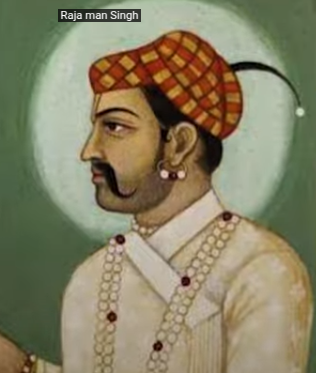
He led 10,000 men against his own kinsman at Haldighati. He was Akbar’s “Farzand” – son by adoption in all but blood. And in the same lifetime, he poured a fortune into rebuilding the temples of Varanasi, Vrindavan, and Puri. Three centuries later, historians are still arguing about which of those facts defines him. This is the full story – birth to death, lineage to legacy – along with what the earliest Mughal and Rajput chronicles actually say about him, and what modern scholars have made of it since.
A quick correction first: You may have seen it written that Man Singh fought 77 battles. Every primary-adjacent source checked for this piece – the original draft this article is based on, historian Rima Hooja’s 2025 biography The Emperor’s General, and Sir Jadunath Sarkar’s A History of Jaipur (as cited by Pragyata) – gives the figure as sixty-seven major battles and campaigns across Kabul, Balkh, Bukhara, Bengal, Orissa, and the Deccan. This piece uses 67 throughout. If you have a specific source for 77, it’s worth citing directly so readers can check it themselves.
Vansawali: The Kachhwaha Lineage Behind Man Singh
Man Singh belonged to the Kachhwaha Rajput dynasty of Amber (Dhoondhar), a clan tracing its ancestry to the Suryavanshi (solar) lineage. Some accounts of the family push the line back much further – to a king named Dhola, and later to Raja Pajvan, said to have fought alongside Prithviraj Chauhan at the Battle of Tarain, and to another Raja Prithviraj who fought beside Mewar’s Rana Sanga at Khanua. The generations that matter most for Man Singh’s own story:
| Generation | Name | Role |
| Grandfather | Raja Bharmal (Bihar Mal) | First Kachhwaha ruler to marry a daughter into the Mughal imperial family (1562), tying Amber’s fortunes to Akbar’s court |
| Father | Raja Bhagwant Das | 23rd Raja of Amber (r. 1574–1589); Mughal mansabdar; governor of Lahore and briefly Kabul |
| Mother | Rani Bhagawati Ji Sahiba | of Amber |
| — | Man Singh I | 24th Raja of Amber (r. 1589–1614) |
| Son/successor | Bhau Singh | r. 1614–1621 |
| Grandson | Jai Singh I | r. 1621–1667 — later built up Amber’s prestige further and whose descendants founded Jaipur |
Man Singh’s own line came to be known as the Rajawats, retaining ceremonial precedence at the Amber–Jaipur court for generations. Among his sons, Jagat Singh (a battlefield commander in Bihar and Orissa), Himmat Singh, Durjan Singh, and Bhau Singh (his eventual successor) recur throughout the record.
Who Was Raja Man Singh to Jodha Bai?
This comes up constantly, so it’s worth answering directly and carefully, because popular television and folk retellings have scrambled it. The woman commonly called “Jodha Bai” in popular culture is more precisely identified by historians as Mariam-uz-Zamani, the Kachhwaha princess of Amber who married Akbar in 1562 – the marriage arranged by Raja Bharmal, Man Singh’s grandfather. That makes her Man Singh’s father’s sister – his paternal aunt – and makes Man Singh, by that marriage, a nephew-by-marriage to Akbar himself. (Whether “Jodha Bai” and Mariam-uz-Zamani are actually the same historical person is itself a point some historians dispute, since the name “Jodha Bai” doesn’t appear in contemporary Mughal chronicles — a separate rabbit hole worth flagging to readers rather than glossing over.)
Birth and Early Life (1550–1562)
Man Singh was born on Sunday, 21 December 1550, at Amber, roughly eight years younger than Akbar and about ten years younger than his own kinsman-turned-rival, Maharana Pratap of Mewar.
In 1562, when Akbar visited Ajmer, Raja Bharmal offered his eldest daughter in marriage to the young emperor – the decision that pulled the Kachhwahas permanently into the Mughal inner circle. From boyhood, Man Singh trained rigorously in both Rajput and Mughal military traditions, a dual grounding that later made him equally fluent in Rajput and Mughal battle tactics.
Rise at Akbar’s Court: The Navaratna
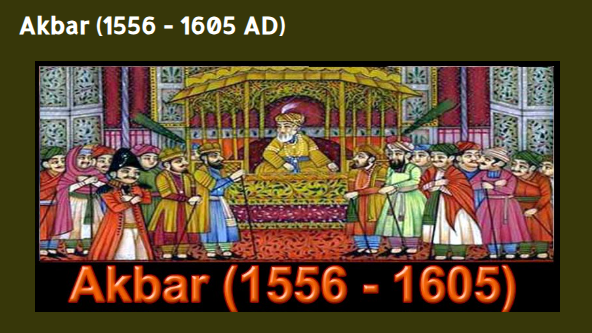
By his late teens Man Singh already carried serious command. At just seventeen, Akbar made him a mansabdar of 5,000 – an extraordinary rank for someone so young. He was later counted among Akbar’s legendary Navaratnas (“nine gems”), alongside Raja Birbal, Raja Todar Mal, Abul Fazl, and Tansen.
As Rima Hooja’s recent biography puts it, Man Singh’s role in this circle was no mere honorific: he was a polyglot and man of letters who functioned as a trusted statesman and diplomat, not simply a general dispatched to distant frontiers, but a figure genuinely embedded in imperial decision-making.
The Battle of Haldighati (1576): Kinsman Against Kinsman
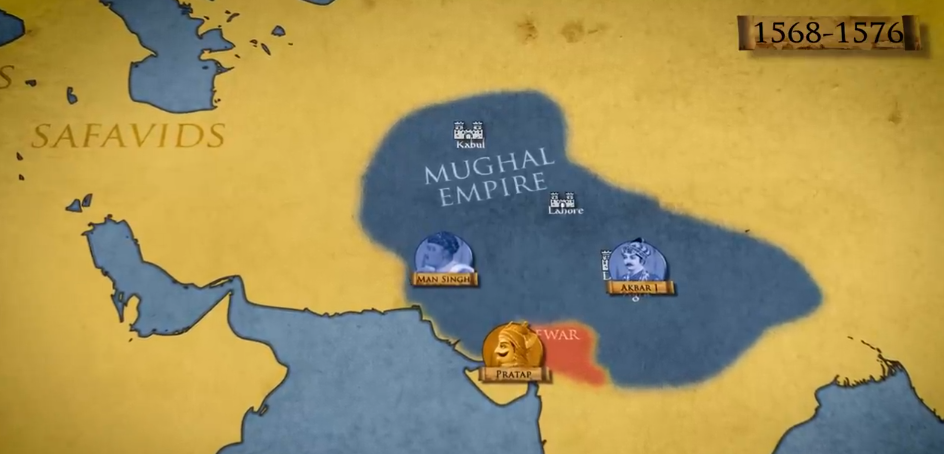
In 1572, Akbar sent Man Singh to Mewar to persuade Maharana Pratap to accept Mughal sovereignty. Popular retellings describe a dramatic insult at a banquet – Pratap allegedly refusing to dine with Man Singh. Rigorously sourced accounts push back hard on this. Historians including Sir Jadunath Sarkar, Dr. Raghubir Singh, and Dr. Gopinath Sharma have all concluded the banquet-insult story has no basis in contemporary record and is a later bardic embellishment. What’s certain is that the diplomatic mission failed and war followed.
The Battle of Haldighati was fought on 18 June 1576 near the Haldighati pass in the Aravallis. Pratap commanded roughly 3,000 horsemen, war elephants, and around 400 Bhil archers under Rana Punja, arranged in five wings. Man Singh led a Mughal force of about 10,000, including some 4,000 Kachhwaha Rajputs. Pratap’s opening charge scattered the Mughal flanks; Man Singh’s counter-charge, backed by war elephants, eventually turned the field. Pratap escaped into the hills, helped off the field by his own nobles. Man Singh held the ground but did not pursue – by some accounts, a deliberate choice to spare his kinsman further humiliation.
What followed is less romanticised but just as revealing: after the battle, Man Singh actively prevented any plunder or destruction in Mewar’s territory, according to the Tabaqat-i-Akbari, and reportedly kept his own hungry soldiers from looting despite supply shortages, per the Haqiqatha-i-Hindustan. Akbar, suspicious that Man Singh had gone easy on his own blood, recalled him from command and briefly withheld both his own and his father’s honours – a striking detail that complicates any simple “loyal servant” reading of the man.
Pratap, for his part, did not fold: he came back over subsequent years to reclaim large parts of his kingdom through battles at Dewair, Gogunda, Chawand, Kumbhalgarh, and others – leading to the well-worn but broadly fair summary that he lost the battle but won the war for Mewar’s independence.
The Kabul Campaigns (1581–1586): Crossing the Indus First
When Akbar’s half-brother Mirza Muhammad Hakim marched on Lahore in 1581, Akbar rode north with Man Singh at his side. Man Singh was the first to cross the flooded River Indus, pressing the advance that sent Mirza Hakim fleeing. Akbar made him governor of Kabul – a Rajput ruling a Muslim frontier province, which predictably drew resentment from local chiefs. Rather than disgrace him, Akbar simply transferred him to Bengal instead, a sign of continued high regard.
The northwest wasn’t finished with him. In 1585–86, after a disastrous Mughal expedition against the Yusufzai and Mandanr tribes cost the empire Raja Birbal’s life, Man Singh forced the Khyber Pass and decisively broke five major Afghan tribal confederacies. Amber’s state flag changed afterward from a plain green-and-white banner to the five-coloured Pachranga, commemorating the five defeated tribes – a flag Jaipur carried until 1949.
Governor of Bihar (1587–1594) and the Orissa Campaign (1590-1592)
As Subahdar of Bihar, Man Singh subdued local rajas sheltering Afghan rebels, starting with Puranmal of Gidhaur. Sent next against the Afghan ruler Qatlu Khan Lohani of Orissa, his advance force under his son Jagat Singh suffered a serious early reverse – several senior commanders killed – before the campaign turned. By 1592, after further fighting near Jaleswar, Orissa’s conquest was complete, including the reduction of several Hindu rajas who had sheltered fleeing Afghans. One widely repeated detail from this campaign: after retaking the Jagannath Temple at Puri from Afghan control, Man Singh is said to have washed his blood-stained sword in the sea there.
Viceroy of Bengal (1594 -1606): Two Decades on the Eastern Frontier
Made guardian of Prince Salim (the future Jahangir) and Viceroy of Bengal in 1594, Man Singh spent the better part of two decades here across three separate terms. He founded the provincial capital Akbarnagar (Rajmahal) in 1595 as a defensible administrative hub, crushed Arakanese pirate raids on the delta, and effectively completed the Mughal absorption of Bengal – an achievement Hooja’s biography treats as arguably more significant, if less romanticised, than Haldighati itself.
Court Politics and the Succession Crisis (1600s)
As Akbar aged, the court split between Prince Salim and Salim’s own son Khusrau Mirza, seen by many nobles as the abler heir. Man Singh – whose sister was Salim’s wife, making Khusrau his nephew – backed Khusrau’s claim, alongside Mirza Aziz Koka. When Akbar nonetheless named Salim his successor in 1605, Man Singh did not work against the decision once made. He was briefly reappointed to Bengal in November 1605 but replaced within a year; Jahangir also had some of Man Singh’s own architectural additions at Amber undone, a small but telling sign of residual distrust.
Final Campaign and Death (1611–1614)
Jahangir sent Man Singh, by then past sixty, to the Deccan in 1611 to help suppress a revolt led by the formidable Malik Ambar. It was here, on active service, that his long career of some sixty-seven major battles and campaigns – spanning Kabul, Balkh, Bukhara, Bengal, and central and southern India – finally ended.
Raja Man Singh I died a natural death on 6 July 1614 at Ellichpur (present-day Achalpur, Maharashtra), around 63 years old, after over five decades of continuous service under two emperors. He was succeeded by his son Bhau Singh, then his grandson Jai Singh I.
Temple Builder and Zirnodwar (Restorer) of Hindu Shrines
Away from the battlefield, Man Singh directed extraordinary resources into rebuilding Hindu religious sites across the subcontinent:
- Govind Dev Temple, Vrindavan – his most famous commission: a seven-storeyed red sandstone temple for Srila Rupa Goswami, built at a reported cost of one crore rupees; the surviving four-storey structure is still a Vrindavan landmark.
- Kashi Vishwanath Temple, Varanasi, plus Man Mandir Ghat on the Ganga.
- Shila Devi Temple, Amber Fort – he brought the image of Shila Devi from Jessore, Bengal, and installed her as the Amber royal family’s tutelary goddess.
- Jagannath Temple, Puri – restoration and re-establishment of worship after earlier disruption.
- Ram Mandir, Saidpur (near present-day Islamabad, Pakistan).
- Numerous temples and ghats at Mathura, Gaya, Haridwar, Dwarka, and Allahabad, plus a Ganesh temple at Rohtas Fort.
Some popular-history writers, including Pragyata’s Yogendra Singh, go considerably further, crediting Man Singh with saving or rebuilding several thousand temples across a corridor from present-day Pakistan to Bengal. That specific figure is a much larger and more contested claim than the itemised list of named temples above, and it isn’t corroborated in the same way by the more source-grounded biographies. It’s presented here as one view within a genuinely unsettled debate, not as an established fact.
The Poet-Saint Connection: Tulsidas
Tradition holds that Man Singh’s son Jagat Singh I was partly educated by the poet-saint Goswami Tulsidas, author of the Ramcharitmanas, and that Man Singh himself regularly attended Tulsidas’s discourses – placing his court at the intersection of Mughal statecraft and the great Bhakti literary movement of the age.
The Primary Sources: What the Earliest Records Actually Say
If you want to go past modern retellings to material written during or very close to Man Singh’s own lifetime (1550–1614), here’s the real archive – and what each source is actually useful for.
Mughal-side Persian chronicles
Akbarnama (Abu’l-Fazl ibn Mubarak) is the single most important contemporary account, covering Man Singh’s campaigns, his standing at court, and Haldighati in detail. It’s also where one particularly vivid and lesser-known anecdote survives: a drunken Akbar, egged on by courtiers boasting of Rajput bravery, tried to press a sword into his own chest to “prove” his valour at par with the Rajputs present – and it was Man Singh who knocked the blade aside, wounding his own hand and briefly earning Akbar’s drunken anger before the emperor cooled down. It’s a small scene, but it captures the strange intimacy of Man Singh’s relationship with Akbar better than most battle accounts do.
Ain-i-Akbari, Abu’l-Fazl’s companion volume on Mughal administration, is the place to look for Man Singh’s formal mansab rank and administrative responsibilities rather than narrative colour.
Muntakhab-ut-Tawarikh (Abd al-Qadir Bada’uni) offers a contemporary but notably more critical perspective – Bada’uni was frequently at odds with Akbar’s religious policy – and is often cross-checked by modern historians specifically on Haldighati, since his account doesn’t share Abu’l-Fazl’s court-flattering incentives.
Tabaqat-i-Akbari (Nizamuddin Ahmad) is another contemporary Persian history of Akbar’s reign with references to Man Singh’s service; it’s also the source, per Pragyata’s account, for the detail that Man Singh restrained his troops from plundering Mewar after Haldighati.
Iqbalnama-i-Jahangiri (Mutamad Khan) picks up the story into Jahangir’s early reign, covering Man Singh’s later career.
Tuzuk-i-Jahangiri (Jahangirnama) – Jahangir’s own memoirs – contains the emperor’s personal references to Man Singh, useful precisely because it’s an insider’s, not a court historian’s, account.
Rajput-side sources
The Kachhwaha vansawalis (genealogies) from Amber/Jaipur, and the khyats – traditional Rajasthani chronicles later compiled by figures like Muhnot Nainsi – preserve the Rajput-side memory, though many of these were compiled after Man Singh’s own lifetime and carry the bardic embellishments that modern historians (Sarkar, Sharma, Hooja) have had to sift out, such as the disputed Haldighati “banquet insult.” Temple inscriptions Man Singh himself commissioned at Vrindavan, Amber, and Varanasi function as genuinely contemporary, if narrow, evidence.
There’s no single “hidden” contemporary book devoted only to Man Singh – his life survives scattered across exactly these Persian court chronicles, Rajput genealogies, royal farmāns, temple inscriptions, and administrative records, which is precisely why a synthesising modern biography is useful.
The modern biographies, compared
Raja Man Singh of Amber by Rajiva Nain Prasad (Calcutta: World Press Private Ltd., 1966, 196pp) was, for decades, the standard scholarly biography, drawing extensively on the Persian chronicles and inscriptions above – its index alone name-checks the Akbarnama, Tabaqat-i-Akbari, Muntakhab-ut-Tawarikh, and Iqbalnama-i-Jahangiri as core sources. It’s out of print but freely available to read: the Indira Gandhi National Centre for the Arts has digitised a copy on the Internet Archive (identifier dli.ministry.26731), the exact link you flagged.
The Emperor’s General: The Life and Times of Raja Man Singh of Amber by Rima Hooja (Speaking Tiger Books, October 2025) is the newer, more exhaustive treatment, and reviewer Mahitosh Gopal’s assessment for the Asian Review of Books is worth summarising directly: Hooja’s central argument is that Man Singh has long been trapped between two reductive framings – dismissed as a mere Mughal vassal on one side, or vilified as a Rajput traitor for Haldighati on the other – and her book tries to restore him to his real position as a pan-Indian statesman-general who was, in his own right, one of the architects of the Mughal state. The review specifically notes that Hooja’s more rigorous reliance on authenticated Persian and Rajasthani documentation leads her to dismiss dramatic but poorly attested anecdotes (like the Haldighati banquet insult) that earlier, more romantic accounts – including Colonel Tod’s Annals and Antiquities of Rajasthan – were happy to repeat.
Read together, Prasad (1966) and Hooja (2025) bookend six decades of scholarship on the same man: the older book laying down the documentary skeleton, the newer one using it to argue for a more integrated, less binary picture of who Man Singh actually was.
Legacy: A Genuinely Contested Figure
It’s worth being honest with readers here rather than picking a side. Man Singh’s reputation splits sharply depending on who’s telling the story. In parts of Rajasthan, particularly around Chittorgarh, he is remembered – sometimes fiercely – as the man who led a Mughal army against his own Rajput kinsman at Haldighati, a memory carried through family and clan tradition rather than textbooks, and not easily dislodged by counter-argument. Writers like Pragyata’s Yogendra Singh push back hard against that framing, arguing his post-battle restraint, decades of frontier service, and enormous temple-building program mark him as a protector of dharmic institutions operating from an extremely constrained position. Hooja’s more measured, source-driven biography sits between these positions: neither hero nor traitor, but a pan-Indian statesman whose loyalties and legacy were always going to be read differently depending on where you’re standing when you look back at him.
Frequently Asked Questions
Who is the Raja of Amber? Man Singh I was the 24th Kachhwaha Raja of Amber, ruling from 1589 to 1614, succeeding his father Raja Bhagwant Das.
Who was Raja Man Singh to Jodha Bai? By the identification most historians use, “Jodha Bai” (Mariam-uz-Zamani) was Man Singh’s father’s sister — making him her nephew and, through her marriage to Akbar, a nephew-by-marriage of the emperor himself.
What was Raja Man Singh famous for? Commanding the Mughal army at the Battle of Haldighati against Maharana Pratap, and for governing Kabul, Bihar, and Bengal as one of Akbar’s most powerful subahdars – alongside building or rebuilding major Hindu temples from Varanasi to Puri.
What happened to Raja Man Singh? He died of natural causes on 6 July 1614 at Ellichpur (Achalpur, Maharashtra), while still on active service in the Deccan under Emperor Jahangir, at around 63 years of age.
When was Raja Man Singh born and when did he die? 21 December 1550 at Amber, to 6 July 1614 at Ellichpur – around 63 years of age.
How many battles did he fight? Sixty-seven major battles and campaigns, per the sources checked for this article – not 77, a figure that doesn’t appear in any primary-adjacent source consulted here.
What was his role at Haldighati? He commanded the roughly 10,000-strong Mughal army against Maharana Pratap on 18 June 1576. The Mughals held the field, but Pratap escaped, and Man Singh notably prevented any plunder of Mewar’s territory afterward.
Which temples did he build? Govind Dev Temple (Vrindavan), Shila Devi Temple (Amber Fort), Kashi Vishwanath Temple and Man Mandir Ghat (Varanasi), Ram Mandir (Saidpur), and restoration work at the Jagannath Temple (Puri), among others.
Who succeeded him? His son Bhau Singh (1614), then his grandson Jai Singh I (from 1621).
What are the best primary sources on Raja Man Singh? The Akbarnama and Ain-i-Akbari (Abu’l-Fazl), Muntakhab-ut-Tawarikh (Bada’uni), Tabaqat-i-Akbari (Nizamuddin Ahmad), Iqbalnama-i-Jahangiri (Mutamad Khan), and Jahangir’s own Tuzuk-i-Jahangiri – supplemented by Kachhwaha vansawalis, Rajasthani khyats, and his own temple inscriptions.
What’s the best modern biography to start with? Rajiva Nain Prasad’s 1966 Raja Man Singh of Amber (free to read on the Internet Archive) for the documentary groundwork, and Rima Hooja’s 2025 The Emperor’s General for the fullest, most current synthesis.
Sources consulted for this piece
- Rima Hooja, The Emperor’s General: The Life and Times of Raja Man Singh of Amber (Speaking Tiger Books, 2025) – reviewed by Mahitosh Gopal, Asian Review of Books
- Yogendra Singh, “Chequered Brilliance of Raja Man Singh of Amer,” Pragyata (2021)
- Rajiva Nain Prasad, Raja Man Singh of Amber (World Press Private Ltd., 1966) – digitised copy, Internet Archive
- “Akbar tries to injure himself, Man Singh stops him,” Mariam-Uz-Zamani blog (2015), quoting the Akbarnama
- Note: a Reddit r/IndianHistory thread on Man Singh was suggested for this piece but could not be accessed (site access blocked); it has not been used as a source here.