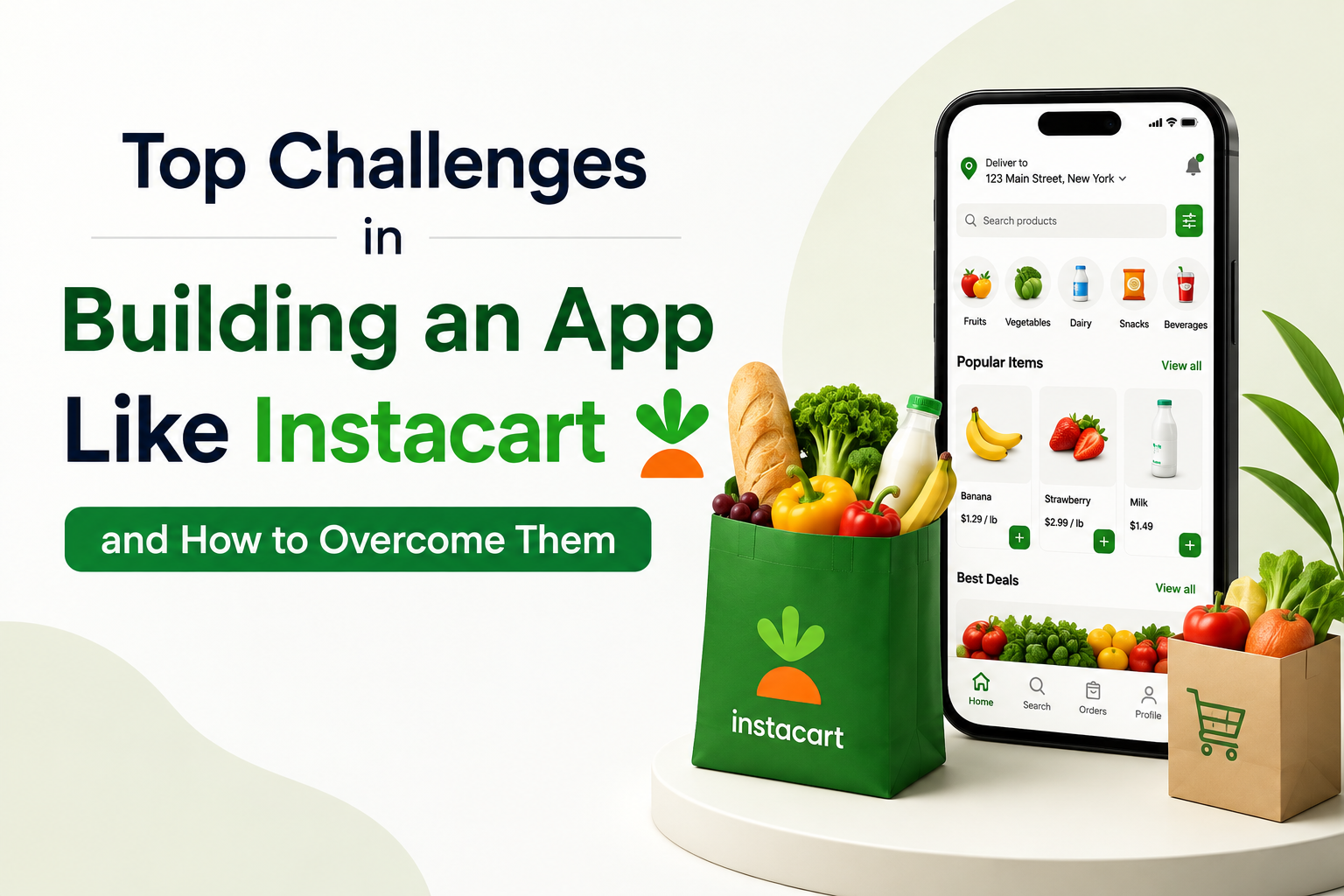

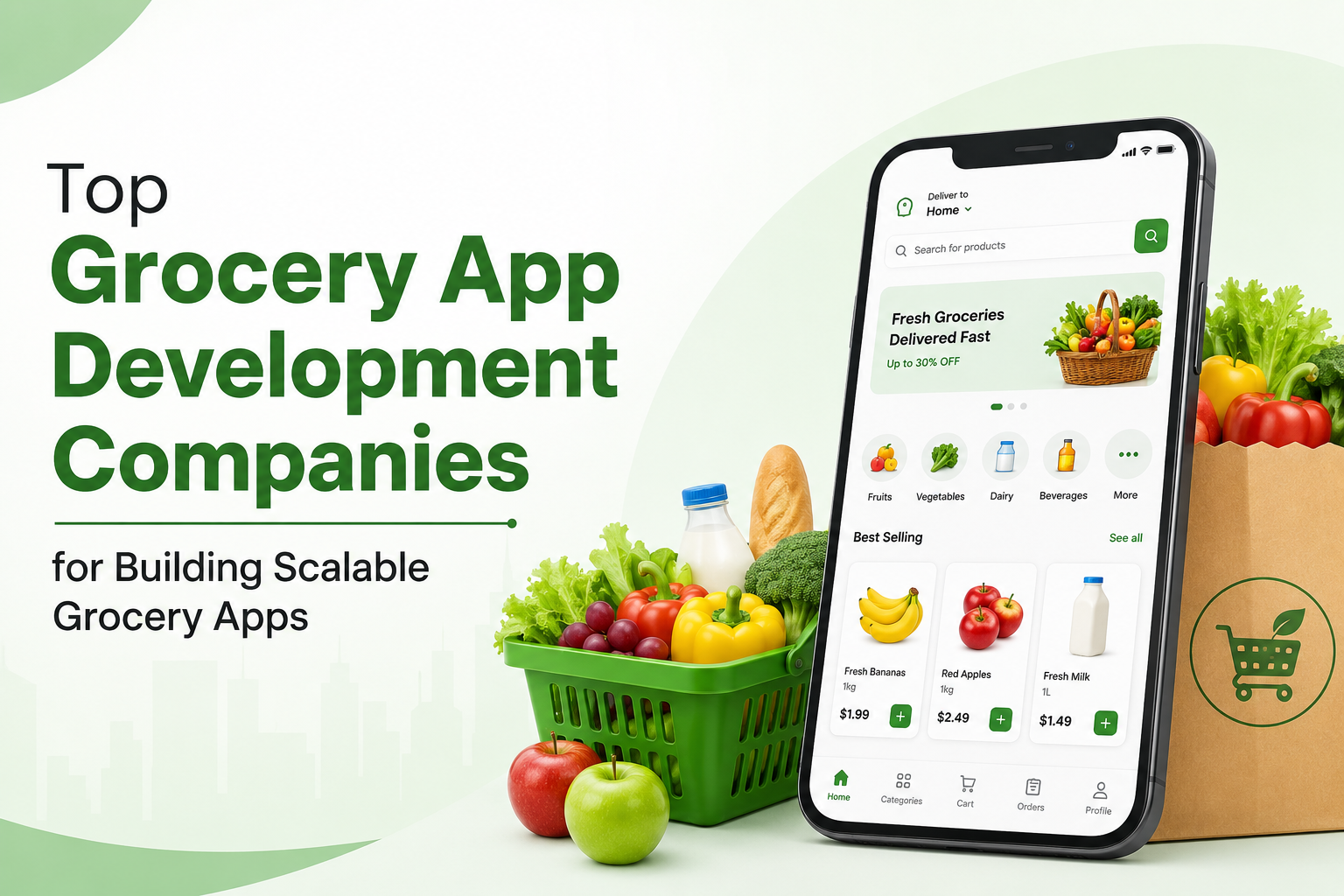
Grocery shopping has rapidly evolved from routine supermarket visits to convenient, app-based experiences. Today, customers can browse extensive product catalogs, compare prices, check availability, place orders, choose delivery slots, and receive groceries at their doorstep all from a smartphone. As convenience and digital ordering become increasingly important, grocery businesses are turning to mobile apps to reach customers and streamline operations.
However, building a successful grocery app involves more than creating a digital storefront. A reliable platform must handle large product catalogs, real-time inventory updates, secure payments, order management, delivery coordination, promotions, and high user volumes without compromising performance. For businesses operating multiple stores or vendors, the technology must also support centralized management and seamless scalability.
This makes choosing the right grocery app development company an important business decision. An experienced development partner can help transform your business model into a scalable digital platform while reducing technical risks, development time, and long-term maintenance costs.
In this guide, we evaluate the top grocery app development companies based on their industry expertise, mobile development capabilities, scalability, technology proficiency, feature depth, and track record. Whether you are launching an online grocery store or building a multi-vendor grocery marketplace, these companies can help you identify a suitable technology partner for your business goals.
How We Selected These Top Grocery App Development Companies
Choosing the right grocery app development partner requires more than comparing company names or years in business. We evaluated these companies against practical criteria that matter when building and scaling a grocery platform:
- Grocery & eCommerce Expertise: Experience building grocery stores, marketplaces, delivery platforms, or related eCommerce solutions.
- Mobile App Capabilities: Expertise in developing reliable Android and iOS apps with intuitive customer experiences.
- Feature Depth: Ability to support essential features such as inventory management, payments, order tracking, delivery management, promotions, and multi-vendor operations.
- Scalability: Solutions and architectures capable of handling growing catalogs, users, orders, vendors, and multiple locations.
- Technology Expertise: Proficiency with modern technologies, frameworks, APIs, cloud infrastructure, and third-party integrations.
- Customization & Flexibility: Ability to adapt the platform to different grocery business models and operational requirements.
- Track Record: Company experience, portfolio strength, client work, and demonstrated ability to deliver digital commerce solutions.
These criteria help provide a balanced view of each company’s capabilities and suitability for grocery app development.
Top Grocery App Development Companies
Discover leading grocery app development companies that help startups, retailers, and entrepreneurs build scalable online grocery marketplaces. These providers offer solutions ranging from ready-made grocery software to fully customized apps with multi-vendor, delivery, and mobile capabilities.
1. FATbit Technologies
FATbit Technologies is a software development company with experience in eCommerce and marketplace solutions dating back to 2004. For businesses looking to build an online grocery platform, its dedicated solution, Growcer, is designed specifically for grocery ordering and delivery operations rather than being positioned as a generic eCommerce application.
Growcer supports different grocery business models, including single-vendor stores, multi-vendor marketplaces, and inventory-based operations. Its feature set covers the key workflows required to manage an online grocery business, with dedicated capabilities for administrators, sellers, buyers, and delivery staff.
Key capabilities include:
- Buyer and delivery-partner apps for Android and iOS
- Multi-vendor marketplace functionality
- Real-time inventory management and stock reporting
- Delivery scheduling, order tracking, and delivery management
- Order adjustment and product substitution workflows for unavailable items
- Click-and-collect functionality
- Multiple payment options
- Multilingual, multicurrency, RTL, and LTR support
- Admin and seller dashboards with reporting and analytics
- Customization options and source code modification capabilities
Another factor that makes FATbit a strong contender is its combination of ready-made software and custom development capabilities. Businesses can use Growcer as a foundation for a faster launch and further customize the platform to align with their specific workflows and requirements. FATbit states that Growcer is white-label and customizable, with dedicated mobile apps and support for scaling grocery operations.
For startups, independent grocers, multi-vendor marketplace operators, and established retailers looking to digitize their operations, FATbit Technologies offers a purpose-built alternative to developing a grocery platform entirely from scratch.
Best for: Businesses looking for a ready-made, customizable, and scalable grocery eCommerce solution with support for multi-vendor operations and dedicated buyer and delivery apps.
2. Chetu
Chetu is an established custom software development company with extensive experience building technology solutions for retail, grocery, and other industries. Its grocery app development services focus on creating customized platforms tailored to specific business models, operational workflows, and customer requirements rather than relying on generic templates.
The company can develop grocery delivery apps with features such as customer ordering, product catalogs, shopping carts, secure payments, order management, delivery tracking, inventory integration, and administrative dashboards. Its technical expertise also supports integrations with POS, ERP, CRM, inventory, and other third-party systems.
Key Capabilities:
- Custom grocery app development
- Online grocery ordering and delivery
- Product catalog and inventory management
- Secure payment gateway integration
- Order and delivery management
- POS, ERP, and CRM integrations
- Customer and admin dashboards
- Third-party API integrations
- Scalable enterprise-grade solutions
- Cross-platform mobile app development
Chetu is particularly suitable for established grocery retailers and enterprises with complex workflows, legacy systems, or specialized operational requirements.
Best for: Grocery businesses requiring complex integrations and fully customized app development.
3. ScienceSoft
ScienceSoft is a software development and IT consulting company with experience delivering digital solutions for retail, grocery, and on-demand delivery businesses. Its approach combines technology consulting with custom software development, helping grocery businesses define their technical requirements before moving into development.
The company can support grocery app projects involving backend architecture, cloud infrastructure, data management, third-party integrations, and customer-facing applications. This makes it a suitable option for businesses that need more than app development and require guidance on building a scalable technology ecosystem.
Key Capabilities:
- Custom grocery app development
- Backend and cloud architecture
- Grocery ordering and delivery solutions
- Third-party API integrations
- Database and data management
- Inventory and order management
- Payment integration
- Customer and admin applications
- Enterprise software integration
- Technology consulting and strategy
Best for: Grocery businesses seeking strategic technology consulting alongside custom app development, particularly for backend architecture and complex integrations.
Suggested Read: How to Develop a Grocery Delivery App
4. WillowTree
WillowTree specializes in creating mobile-first digital experiences for consumer brands, with a strong focus on user experience, interface design, and product strategy. For grocery businesses, its approach can help create intuitive apps where customers can quickly search products, build carts, complete checkout, and manage orders.
Its emphasis on design and usability makes WillowTree a potential fit for grocery brands that view their mobile application as an important part of their overall customer experience. The company can combine product strategy, UX design, and engineering to create polished consumer-facing applications.
Key Capabilities:
- Mobile grocery app development
- UX/UI design and product strategy
- Customer-focused ordering experiences
- Product search and navigation
- Shopping cart and checkout flows
- Payment integration
- Personalized digital experiences
- Cross-platform application development
- Backend and API integration
- Performance-focused mobile experiences
Best for: Grocery and retail brands that prioritize user experience, mobile usability, and high-quality app design.
5. Folio3
Folio3 provides custom software development services with experience across food, agriculture, retail, and grocery technology. Its solutions can address operational requirements such as multi-store catalogs, inventory management, delivery scheduling, order processing, and integration with existing business systems.
The company’s experience in food and agriculture technology can also be valuable for grocery businesses dealing with perishable products, complex supply chains, and store-level inventory. Its custom approach allows retailers to connect their digital grocery platform with existing POS, ERP, and inventory infrastructure.
Key Capabilities:
- Custom grocery app development
- Multi-store and multi-location support
- Product catalog management
- Inventory management
- Delivery slot scheduling
- Order and fulfillment management
- Product substitution workflows
- POS and ERP integration
- Supply chain integration
- Grocery delivery solutions
Best for: Grocery retailers with physical stores or established supply chains that need their app integrated closely with existing POS, ERP, and inventory systems.
Conclusion
Choosing the right grocery app development partner depends on more than technical expertise. Businesses should consider their operating model, scalability requirements, budget, customization needs, integration requirements, and expected time to market before making a decision. A grocery platform must be capable of managing everything from product catalogs and inventory to payments, order fulfillment, delivery coordination, and customer engagement.
For businesses with highly specialized workflows or complex legacy systems, custom development can provide greater flexibility and control. However, startups, retailers, and entrepreneurs looking to launch faster may benefit from a ready-made, customizable grocery solution that provides core marketplace and delivery functionality without the time and expense of building everything from scratch.
Ultimately, the right choice is the one that aligns technology with the business model while leaving enough flexibility to scale. Before selecting a grocery app development company, evaluate its grocery-specific experience, feature coverage, mobile capabilities, integration options, customization flexibility, scalability, support, and long-term ownership terms. A well-chosen technology partner can help turn a grocery business idea into a reliable digital platform built for sustainable growth.